Youth Survey: How to Find the Ideal Respondents
12 min read

If you want to conduct a survey with young people, know that one of the most important points is to find the ideal respondents. But don't worry: it's simpler than it seems. In this content, we will show you how to reach the right audience and increase the chances of obtaining more relevant results for your research.
Up to what age is an audience defined as young?
According to the Youth Statute, in Brazil, individuals aged between 15 and 29 years are considered young. This definition is used in public policies, research, and studies aimed at this audience.
However, depending on the research objectives, some companies and institutions may also include adolescents from 13 years old or create specific segmentations, such as young people aged 15 to 17, 18 to 24, and 25 to 29.
This division allows identifying differences in behavior, consumption habits, interests, and needs among the various phases of youth, making the results more precise and relevant.
Which generations are considered young?
Currently, when we talk about young audiences, the generations that stand out the most are Generation Z and Generation Alpha. Although there are variations in the dates used by different studies, generally, Generation Z is composed of people born between 1997 and 2010, while Generation Alpha includes those born from 2010 onwards.
About Generation Z
Generation Z grew up alongside the popularization of the internet, smartphones, and social media.
Therefore, they tend to be very familiar with technology, value digital experiences, and seek information quickly and practically. It is also a generation that tends to show interest in topics such as diversity, sustainability, and authenticity in relationships with brands and companies.
About Generation Alpha
Generation Alpha, on the other hand, is considered the first entirely digital native generation. From their earliest years, its members live with connected devices, artificial intelligence, streaming, and different forms of digital interaction.
Although many are still in childhood or adolescence, they already exert significant influence on family purchasing decisions and represent an increasingly relevant audience for market research.
Why conduct research with young people?
There are several reasons to study this audience; the most common are:
Understand behaviors and trends
Young people are often the first to adopt new technologies, consumption habits, and forms of interaction. Conducting research with this audience helps identify trends before they become popular, allowing brands and organizations to anticipate market changes.
Develop more relevant products and services
Understanding the needs, expectations, and preferences of young people contributes to the creation of products, services, and experiences more aligned with what this audience truly seeks. This reduces assumptions and increases the chances of acceptance of the developed solutions.
Create more efficient communication strategies
The way young people consume content and relate to brands is constantly transforming. Research helps to understand which channels, formats, and messages generate more connection, making communication actions more assertive.
Strengthen relationships with the public
Listening to young people's opinions demonstrates genuine interest in their perceptions and needs. In addition to generating valuable insights, this process contributes to building closer relationships and increasing identification with brands, institutions, and projects.
Support data-driven decision-making
Data-driven decisions usually generate more consistent results than those based solely on perceptions. Research provides concrete information about behaviors, interests, and expectations, offering more security to define strategies and investments.
Understand generational changes
Each generation has its own characteristics, values, and priorities. Researching the young audience helps to understand how these changes influence consumption, education, work, technology, and various other aspects of society, allowing for faster adaptation to new demands.
What insights can a youth survey generate?
Like any audience, surveying young people allows for obtaining valuable information. For example:
Understanding consumption habits
Market research helps to understand how young people choose products and services, what factors influence their purchasing decisions, and what they consider most important during the consumption journey. Price, quality, convenience, brand purpose, and influencer recommendations are some of the aspects that can be analyzed.
Identification of emerging trends
Young people are often among the first groups to adopt new behaviors, technologies, and content formats. Therefore, research with this audience can reveal trends that are still gaining momentum, offering an early view of market changes.
Communication preferences
Each generation has different ways of consuming information. A survey allows discovering which channels young people use most frequently, which content formats arouse more interest, and what type of language generates greater connection with the brand.
Perception of brands and products
Understanding how young people perceive a brand is fundamental to strengthening its positioning and identifying opportunities for improvement. Research helps measure recognition, trust, relevance, and purchase intent, as well as revealing strengths and challenges in the experience offered.
Expectations regarding customer experience
Young people value fast, intuitive, and personalized experiences. By listening to this audience, it is possible to identify which factors contribute to a positive experience and which barriers can impact satisfaction and loyalty.
Digital behavior and technology use
Research allows understanding how young people use devices, applications, social media, and digital platforms in their daily lives. These insights help companies develop strategies more aligned with the digital environment in which this audience is inserted.
Interests, values, and important causes
In addition to consumption habits, research can reveal which topics are most relevant to young people, such as sustainability, diversity, inclusion, education, mental health, and social responsibility. This information helps brands build more authentic connections with their audience.
Evaluation of new products, services, or ideas
Before launching, companies can use research to validate concepts, test messages, and understand the receptiveness of the young audience. This reduces risks and increases the chances of success of new initiatives.
Factors influencing decision-making
A youth survey can show who influences young people's choices, whether it's family, friends, content creators, online reviews, or previous experiences. With this information, companies can better direct their marketing and relationship strategies.
Levels of satisfaction and loyalty
It is also possible to measure the degree of satisfaction of young people with specific products, services, or experiences. This data helps identify opportunities for improvement and understand the factors that contribute to brand retention and recommendation.
Changes in behavior over time
By conducting periodic research, it becomes possible to monitor the evolution of young people's preferences and expectations. This allows companies and organizations to continuously adjust their strategies and remain aligned with market transformations.
Which companies benefit most from surveying young audiences?
Many companies conduct or should study this audience. The ones that use this audience the most are:
Technology companies
The technology sector is among those that benefit most from surveying young people. This is because this audience is often one of the first to adopt new applications, devices, platforms, and digital trends. By understanding their needs, behaviors, and expectations, technology companies can develop more relevant products, improve user experience, and identify innovation opportunities.
Educational institutions
Schools, universities, vocational courses, and learning platforms can use youth surveys to better understand young people's interests, challenges, and goals. These insights help in creating more attractive content, more efficient learning methodologies, and educational programs aligned with market demands and new generations.
Entertainment and media companies
Streaming platforms, production companies, broadcasters, game developers, and content companies directly depend on the attention of young audiences. Research allows identifying consumption preferences, most popular content formats, usage habits, and cultural trends, contributing to the creation of more engaging experiences.
Fashion and beauty brands
Young people's behavior strongly influences fashion and beauty trends. Through research, companies can monitor style changes, purchasing preferences, values associated with brands, and expectations regarding products, campaigns, and consumption experiences.
Retail and e-commerce companies
Physical stores and e-commerce use research to understand how young people research products, what factors influence their purchasing decisions, and which channels are most relevant during the consumer journey. This information helps optimize marketing, sales, and relationship strategies.
Food and beverage companies
Young people's eating habits are constantly changing. Research allows identifying preferences, dietary restrictions, new consumption trends, and perceptions of brands and products. With this data, companies can develop launches more aligned with public expectations.
Financial institutions and fintechs
Young people are increasingly connected to digital payment solutions, investments, and financial management. Banks, fintechs, and financial sector companies use research to understand consumption habits, expectations regarding services, and specific needs of this audience, creating more accessible and relevant solutions.
Health and wellness companies
Gyms, health plans, health apps, clinics, and wellness companies can use research to understand young people's concerns, habits, and priorities. This contributes to the development of more personalized services and more effective communication strategies.
Marketing and advertising agencies
Youth surveys help agencies and marketing teams understand behavioral trends, content preferences, and digital habits. These insights are essential for creating more relevant campaigns, increasing engagement, and strengthening the connection between brands and consumers.
Mobility and transportation companies
Transportation apps, urban mobility companies, and vehicle manufacturers can use research to understand how young people get around, which solutions they use most frequently, and what expectations they have regarding convenience, sustainability, and technology.
Non-profit organizations and public institutions
NGOs, foundations, and public bodies also benefit from youth surveys. The data collected helps to understand social needs, identify specific demands, and develop more effective programs, projects, and public policies for this age group.
Which channels are most effective for surveying young people?
Although this audience is highly connected, reaching the right respondents requires more than simply disseminating a questionnaire online. The choice of collection channel directly influences the number of responses received, the quality of the data, and the representativeness of the sample.
Therefore, it is important to know the main channels used to recruit young people and understand in which situations each of them can generate better results.
Respondent panels for recruiting young people
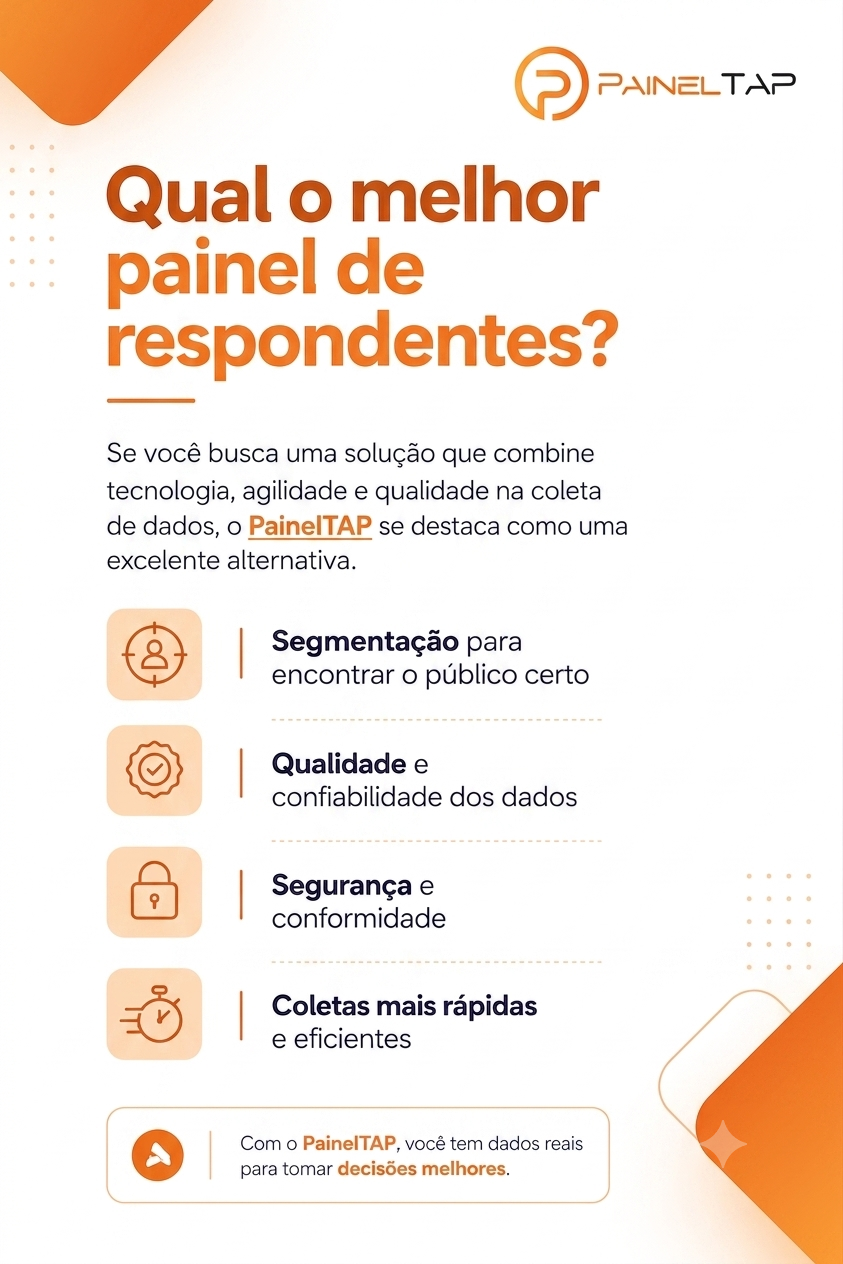
Respondent panels are one of the most efficient and reliable ways to conduct surveys with young people. In these panels, participants have already registered in advance and shown interest in answering surveys in exchange for rewards, points, or benefits.
The main advantage is the possibility of segmenting the sample according to specific criteria, such as age, gender, region, income, education, or consumption habits. This allows quickly finding young people who fit exactly the desired profile for the study.
Furthermore, panels offer greater control over data quality, as they have validation mechanisms, fraud prevention, and response monitoring. For companies that need agility and precision, this is often one of the most efficient alternatives.
Social media
Social media are among the most used channels by young people and can be an excellent alternative for disseminating surveys. Platforms like Instagram, TikTok, X, Facebook, and LinkedIn allow reaching different participant profiles quickly.
However, this model can present challenges related to sample quality, as it is not always possible to control who will answer the questionnaire. Therefore, social media are usually more suitable for exploratory research or when the goal is to expand the reach of the collection.
Online communities
Forums, thematic groups, digital communities, and discussion servers can also be used to find young people interested in certain topics. This channel is especially useful for niche research, when the study seeks participants with specific characteristics or interests.
As members of these communities generally have greater involvement with the researched topic, the responses tend to be more detailed and qualified.
Apps and digital platforms
Many young people spend a lot of time using entertainment, education, productivity, and communication apps. Depending on the research objective, partnerships with apps or digital platforms can help reach highly segmented and engaged audiences.
This strategy is widely used in market research, product testing, and user experience evaluations.
Email marketing
Although not the main channel among younger people, email remains a relevant tool for surveys when there is a qualified contact base. Companies, educational institutions, and organizations can use this channel to invite participants who already have some relationship with the brand.
The success of the strategy depends on the quality of the base and the relevance of the research to the invited audience.
Educational institutions
Schools, universities, and vocational courses can be excellent sources for recruiting young people, especially in academic research or studies focused on education, behavior, and professional development.
In addition to facilitating access to the target audience, this channel allows reaching specific groups of students in an organized and structured way.
Which channel offers the best results?
The answer depends on the research objectives, the desired participant profile, and the level of quality required for the collected data.
However, when the goal is to find qualified young people quickly, safely, and with well-defined segmentation criteria, respondent panels are usually the most efficient alternative.
They combine reach, agility, and data quality, reducing the effort needed to recruit participants and increasing the reliability of the results obtained.
Is the respondent panel efficient for research with young people?
Yes, respondent panels are among the most efficient ways to conduct research with young people. This is because participants are already part of a registered database and have shown interest in answering surveys, which significantly reduces the time needed to recruit respondents.
In addition to agility, panels allow segmenting the sample by criteria such as age, gender, location, education, and consumption habits, ensuring that the research reaches exactly the desired profile. This is especially important when the goal is to obtain more precise and representative data.
Another advantage is the quality of responses. Panels have validation and control mechanisms that help reduce fraud, duplicate responses, and unengaged participation, increasing the reliability of the results.
For companies, institutions, and researchers who want to better understand the behavior, preferences, and opinions of young people, respondent panels offer a combination of speed, reach, and quality that is difficult to find in other recruitment channels.
If you are looking for young people to participate in your next research, PainelTAP can help. With an active community of respondents and advanced segmentation features, your research reaches the right audience quickly, simply, and efficiently. Get to know PainelTAP and discover how to find the ideal respondents for your study.