What is data collection for? Understand its importance
4 min read
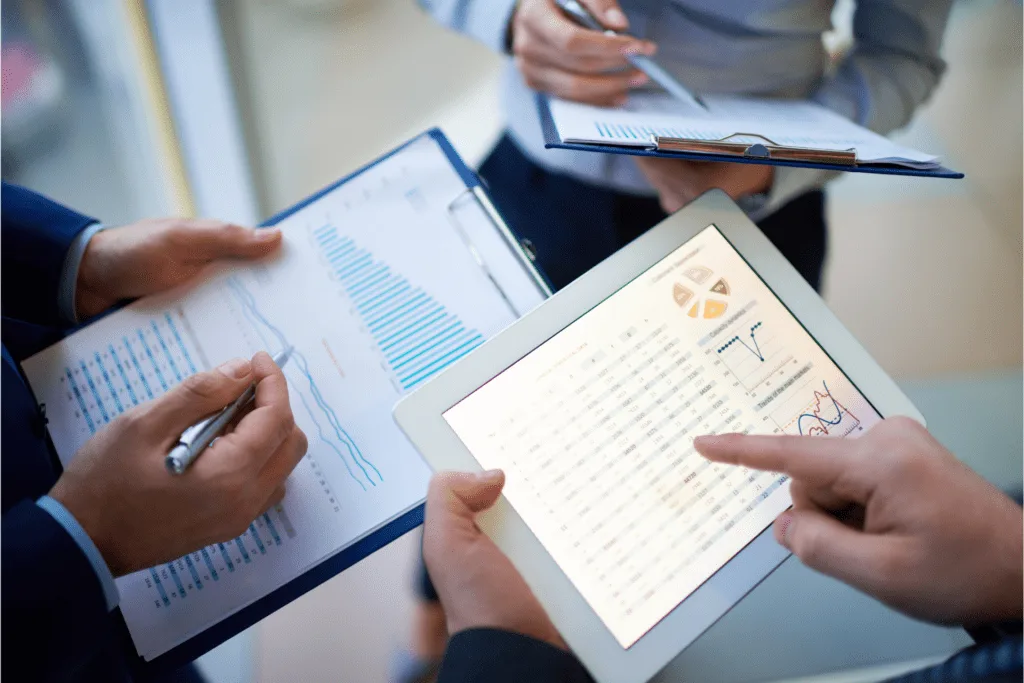
We live in a data-driven era, and it all starts with collection. Whether in the corporate world, the public sector, or even on social media, data collection has become an essential activity for understanding behaviors, predicting trends, and making more accurate decisions.
But after all, what is data collection for? And why has it become so strategic in practically all areas of society?
In this article, we will explain clearly and objectively what data collection is, its purpose in different contexts, and how it can transform routine decisions into high-impact strategies.
What is data collection?
Collecting data, in essence, means gathering relevant information about a specific topic, audience, process, or behavior. This information can be quantitative — such as numbers, statistics, and metrics — or qualitative, involving opinions, perceptions, and feelings. Furthermore, it is obtained through different methods, such as surveys, questionnaires, interviews, forms, digital sensors, or, increasingly, online panels.
However, it's not enough to just collect data indiscriminately. For it to truly make sense and generate value, it is necessary to understand its purpose, interpret it correctly, and use it strategically. It is precisely at this point that strategic collection differs from simple accumulation of information: it directs each stage of the process with a focus on practical results and insights applicable to the business or context being analyzed.
Improve your reading: How online data collection works in research panels
What is data collection for?
1. More assertive decision-making
First of all, one of the main objectives of data collection is to base decisions on concrete evidence. Instead of acting on guesswork or intuition, companies and organizations can analyze real data to define their next steps. This applies to operational, tactical, and even strategic decisions.
For example, a brand can test the acceptance of a new product with a sample of its target audience before launching it nationally. This reduces risk and increases the chances of success.
2. In-depth audience knowledge
Furthermore, another essential purpose is to understand who your consumers, users, or citizens are. Through data collection, it is possible to identify consumption habits, preferences, needs, and even pain points that have not yet been verbalized.
In this way, it is possible to personalize offers, improve service, create more effective campaigns, and build a closer relationship with the public.
3. Monitoring and continuous improvement
Additionally, collecting data over time allows for monitoring the performance of products, services, processes, or actions. This constant monitoring enables quick, evidence-based adjustments, promoting continuous improvement and greater efficiency in results.
4. Innovation and trend anticipation
On the other hand, well-analyzed data can point to behavioral patterns, anticipate changes, and even inspire innovation. Based on these insights, companies can anticipate trends and get ahead of the competition.
5. Support for research and development
Finally, in science, health, and technology, data collection is the basis of any advancement. After all, it is data that supports hypotheses, validates discoveries, and drives new developments.
Read more at: How big companies use data to stand out?
Summary table:
| Data Collection Objective | Description | Practical Benefit |
|---|---|---|
| Assertive decision-making | Base decisions on concrete information, not guesswork | Risk reduction and increased effectiveness in strategies |
| Audience knowledge | Identify user behaviors, preferences, and needs | Creation of more effective campaigns and personalized experiences |
| Monitoring and continuous improvement | Track results over time and make adjustments when necessary | Constant optimization of processes, products, and services |
| Trend anticipation | Detect behavioral patterns and market changes | Innovation and competitive advantage |
| Support for research and development | Validate hypotheses and guide scientific, technological, and social projects | Development of more effective and sustainable solutions |
| Smart segmentation strategies | Filter and analyze data from specific audiences based on relevant criteria | Increased precision and relevance of research and communications |
| Agility in collection with online panels | Use technological platforms to gather real-time data in a segmented and secure way | Speed in collection, greater control, and quality in responses |
Check out our sample calculator: Sample Size Calculator
How to ensure effective data collection?
Not all collection is effective. For data to be truly useful, it is essential to follow good practices:
-
Clearly define the objectives of the collection
-
Choose the most appropriate method (online survey, interview, form, panel, etc.)
-
Segment the audience correctly
-
Validate the quality of responses
-
Ensure data security and privacy
The role of online panels
Nowadays, tools such as online consumer panels, especially those offered by Painel TAP, represent a fast, segmented, and highly reliable way to collect data. Thanks to the combination of cutting-edge technology, intelligent filters, and rigorous validation processes, panels allow precisely listening to the desired audience, delivering data ready for analysis with efficiency and agility.
Furthermore, the use of artificial intelligence, combined with advanced quality control algorithms, further raises the level of confidence in the results obtained, which is essential for transforming information into strategic and informed decisions. With this, companies can reduce risks, identify opportunities more clearly, and act in a much more targeted way.
Need a survey with a sample from an online panel? Count on Painel TAP.
Behind Painel TAP is a team passionate about data and insight generation, who finds in each project a challenge to seek the best and fastest solution for the most diverse types of needs and demands in online surveys and market research.