Paid Market Research
·12 min read

In the dynamic contemporary business landscape, the pursuit of valuable, data-driven insights has become an undeniable priority for organizations of all sizes. In this context, market research emerges as a crucial tool, providing companies with a deep understanding of consumer needs, preferences, and behaviors. A particularly intriguing aspect of this field is paid market research, a method that not only seeks significant data but also recognizes and values participants' contributions through financial incentives.
As companies compete in increasingly saturated markets, the pursuit of a competitive advantage becomes imperative. Paid market research offers an innovative approach, transforming participants into active collaborators whose opinions are not only heard but also monetarily recognized. This article seeks to explore the essence and implications of this approach, highlighting its effectiveness in obtaining high-quality data while fostering a more symbiotic relationship between companies and consumers.
As we delve into the complexities and advantages of paid market research, we aim to offer a comprehensive view of how this practice is reshaping the landscape of strategic information gathering. Through concrete examples, case analyses, and relevant insights, we aim to demonstrate how this approach not only enhances the accuracy of collected data but also builds a solid bridge between brands and their target audience. Paid market research is not just a tool, but an evolutionary strategy that aims not only to understand but also to actively engage consumers, providing mutual benefits in the process.
How to conduct Quantitative Research through an online panel?
Paid market research. What is it about?
Paid market research is a strategic approach to data collection that involves financially compensating research participants who contribute valuable information to market studies. Unlike traditional research methods, where participants may provide data voluntarily and often uncompensated, paid market research recognizes and rewards the time and effort dedicated by respondents.
This practice aims not only to obtain in-depth insights into consumers' preferences, opinions, and behaviors, but also to establish a more collaborative relationship between companies and research participants. Financial incentives can vary, including cash payments, gift cards, discounts on products or services, among other forms of compensation.
Paid market research offers several advantages, such as attracting more engaged participants and obtaining more reliable and representative data. Furthermore, it recognizes the value of participants' contributions, promoting a more equitable and transparent relationship in the data collection process.
This innovative approach has become increasingly popular, standing out as an effective tool for companies seeking strategic insights while actively valuing consumer participation.
How to start paid market research?
Starting paid market research involves a series of strategic steps to ensure the process is efficient and the results are relevant. Here are some guidelines to get started:
1. Define your objectives: Clearly establish the research objectives, identifying the specific information you want to obtain. This will help guide the research design and the appropriate selection of participants.
2. Identify the target audience: Determine the demographic group or market segment that best represents your target audience. This will help ensure that the responses obtained are representative of the group you intend to reach.
3. Choose the research methodology: Decide on the research approach, whether it is online, in-person, by phone, or a combination of methods. Also consider the platform or research tool that will be used.
4. Develop the questionnaire: Create a clear, concise, and relevant questionnaire, addressing questions that align with your objectives. Be sure to include questions that provide valuable insights.
5. Select incentives: Choose the types of incentives that will be offered to participants. This may include cash payments, gift cards, discounts on products or services, among others. Make sure the incentives are attractive to your target audience.
6. Determine the sample size: Estimate the number of participants needed to obtain significant results. This will depend on your target population and the resources available for the research.
7. Choose a research platform: If you are conducting online research, choose a reliable platform for data collection and analysis. Make sure the platform is secure and offers the necessary functionalities for your research.
8. Disseminate the research: Promote the research effectively to reach your target audience. Use relevant channels, such as social media, emails, or partnerships with online communities.
9. Monitor and analyze results: Track the progress of the research and analyze the data as it is collected. Be prepared to adjust the strategy, if necessary, based on preliminary results.
10. Compensate participants: Fulfill the promise of compensation to participants as agreed. This will contribute to the positive reputation of your research and encourage participation in future studies.
By following these steps, you will be well on your way to conducting effective paid market research and obtaining valuable insights for your company.
Online digital panel. Types of respondent panels and how to define them.
Advantages
Conducting paid market research on an online panel offers several advantages for companies seeking strategic insights and wishing to establish a more effective connection with their target audience. Some of the main advantages include:
High Engagement:
- By offering financial compensation or attractive incentives, paid market research attracts more motivated and engaged participants. This results in more detailed and accurate responses, contributing to the quality of the data collected.
Improved Representativeness:
- Compensation can help attract a more diverse sample of participants, ensuring that the research adequately represents the target demographic. This reduces biases and provides more comprehensive insights.
Credibility and Trust:
- By recognizing and rewarding participants, companies demonstrate that they value their opinions. This builds credibility and establishes trust between the organization and consumers, encouraging participation in future research.
Higher Response Rates:
- Offering financial incentives increases the likelihood of participants responding to the survey. This results in higher response rates, allowing companies to collect a significant amount of data in a short period of time.
Greater Participant Retention:
- Compensation not only attracts participants but also encourages loyalty. Respondents are more likely to continue participating in future surveys if they perceive tangible value in their collaboration.
More Accurate and Relevant Data:
- Motivated and engaged participants are more likely to provide detailed and accurate information. This results in more reliable, relevant, and applicable research data for business strategies.
Collaborative Innovation:
- Paid research can encourage collaborative innovation, allowing companies to actively collaborate with consumers in the development of products, services, and marketing strategies.
Time and Resource Savings:
- By ensuring active participation from respondents, companies save time and resources, avoiding rework and the need to conduct additional research due to incomplete or inaccurate responses.
When considering conducting paid market research, it is essential to carefully plan incentives, develop relevant questions, and use effective methods to ensure that participants feel valued and motivated to contribute valuable information.
Maximizing Accuracy: Exploring Sample Types for Surveys
How are people who participate in paid research qualified?
The qualification of participants in paid research is a crucial step to ensure the relevance and representativeness of the collected data. The qualification approach can vary depending on the specific research objectives, the desired target audience, and the criteria established by the client or research company. Here are some common practices for qualifying participants:
Demographic Profile:
- Establish specific demographic criteria, such as age, gender, income, geographical location, and occupation, depending on the nature of the research. This helps ensure that the sample is representative of the target population.
Behavioral and Consumption:
- Consider criteria related to consumer behavior, purchasing patterns, brand preferences, and past experiences. This is particularly important in research aimed at understanding consumer behavior in relation to specific products or services.
Specific Experience or Knowledge:
- In more specialized research, it may be necessary to qualify participants based on their professional experience, technical knowledge, or familiarity with certain subjects. This is common in B2B (business-to-business) market studies or industrial research.
Media and Technology Habits:
- If the research involves aspects related to media habits, online content consumption, or technology use, these criteria can be incorporated to reflect the specific nature of the research.
Purchase History or Product/Service Use:
- For research aimed at understanding customer satisfaction or improving products and services, it is relevant to qualify participants based on their purchase or usage history.
Opinions and Attitudes:
- Determine criteria that identify opinions and attitudes relevant to the research objectives. This may involve screening questions that assess the participant's affinity with certain values or ideas.
Specific Exclusions and Inclusions:
- Define criteria for inclusion and exclusion based on specific factors that may influence research results. This may include age restrictions, health conditions, participation in previous research, among others.
Qualification usually occurs during the recruitment phase, where participants are subjected to a series of screening questions to determine if they meet the established criteria. Paid research companies often use online platforms, telephone interviews, or in-person interviews for this screening.
By ensuring accurate and adequate qualification of participants, the research is guaranteed to meet the established objectives and provide relevant insights for the company's strategic decisions.
How to set up an efficient survey on online panels

Risks
While paid market research offers several advantages, it is also important to consider some risks associated with this approach. Here are some of the main risks to watch out for:
Participation Bias:
- Offering financial incentives can attract individuals who participate in the research solely for the monetary benefit, without having a genuine interest or relevant experience in the subject. This can introduce bias into the results, compromising the quality of the collected information.
Dishonest or Superficial Responses:
- Participants may be tempted to provide dishonest or superficial responses to quickly complete the survey and receive the incentive. This can lead to distorted and unreliable data.
Non-Representative Sample:
- Depending on how participants are recruited, there may be difficulties in obtaining a truly representative sample of the target population. This can lead to erroneous conclusions and inadequate business strategies.
Demographic Biases:
- Compensation can predominantly attract participants from certain age groups, income levels, or geographical regions, introducing demographic biases into the results.
Lack of Sincerity:
- Some participants may provide answers they think the company wants to hear, rather than expressing their true opinions. This can occur especially if participants perceive that certain answers are more aligned with the incentives offered.
High Costs:
- Compensating participants can represent a significant cost for companies, especially if not carefully managed. This can affect the research budget and decrease project profitability.
Ethical Challenges:
- Compensation can raise ethical issues, such as the possibility of manipulation or fraud by participants. It is important to establish ethical practices and closely monitor the research process.
Compromised Data Quality:
- In some cases, the emphasis on compensation can attract participants who are more interested in the incentive than in providing accurate and useful information. This can compromise the overall quality of the data collected.
Market Participant Saturation:
- In certain sectors, the constant offering of paid surveys can lead to saturation of available participants, resulting in rushed responses and a lack of diversity in the sample.
To mitigate these risks, it is essential to adopt careful recruitment practices, develop well-designed questionnaires, diversify data collection methods, and implement rigorous statistical analyses to identify and address potential biases. Furthermore, transparency in communication with participants about the research objectives and the importance of honest responses is also crucial for obtaining reliable results.
How to use paid research participants?
The effective use of participants in paid market research involves several steps, from recruitment to the application of collected insights. Here are some guidelines on how to make the most of paid research participants:
Define Clear Objectives:
- Before starting the research, have clear and specific research objectives. Determine what you want to learn and how the insights will be applied in business strategies.
Recruit a Representative Sample:
- Make sure to recruit a diverse and representative sample of your target audience. This will help ensure that the insights obtained reflect the diversity of opinions within your market.
Offer Attractive Incentives:
- Choose incentives that are attractive to participants. Whether it's money, gift cards, discounts, or other benefits, the compensation should be perceived as valuable and fair in relation to the time and effort required by the research.
Establish Clear Communication:
- Communicate transparently with participants. Clearly explain the research objectives, how the data will be used, and the value of their contribution. Transparency increases trust and engagement.
Develop Relevant Questionnaires:
- Craft well-formulated questionnaires that comprehensively address the research objectives. Ensure that questions are clear, objective, and unbiased.
Promote Active Participation:
- Encourage active participation from respondents. This may involve participation in different phases of the research, such as product testing, interviews, or focus groups. The more involved they are, the richer the insights will be.
Utilize Diverse Methods:
- In addition to online questionnaires, explore diverse data collection methods such as interviews, observations, or product testing. This multifaceted approach can provide a more complete understanding of the participants.
Analyze and Interpret Results:
- After data collection, conduct in-depth analyses to extract significant insights. Consider the nuances in the data and identify patterns and trends that can guide strategic decisions.
Thank and Acknowledge Participants:
- Show gratitude to participants for their contribution. In addition to remuneration, send thank-you messages, share summaries of the results, and highlight the importance of their role in the research.
Apply Insights to Business Strategies:
- Use the insights gained to inform marketing strategies, product development, decision-making, and other relevant areas of your business. Research results should be tangible and positively influence operations.
By following these guidelines, you will be maximizing the value of paid research participants, transforming their contributions into valuable information that drives your company's success and development.
Advantages of an online respondent panel
Testimonials
The use of online panel participants for paid market research is growing steadily, and this use is not limited to companies, whether small, medium, or large. Many people with personal, academic, or even professional projects see online panels as an attractive solution to their research problems due to the advantages highlighted in this article's texts.
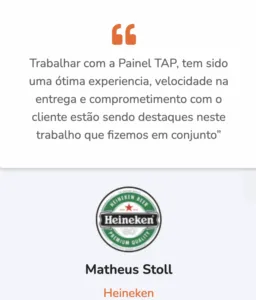
To make use of paid research participants, this requires direct contracting with an online panel company like Painel TAP. See some testimonials about the use of this resource combined with the service and agility of our team:





Need research with a sample of respondents? Count on Painel TAP.
Behind Painel TAP is a team passionate about data and insight generation, who finds in each project a challenge to seek the best and fastest solution for the most diverse types of needs and demands in online research and market investigation.