Brand Research – Objectives – Success Stories – Barbie Brand and How to Do It?
10 min read

Brand research is a systematic process of collecting and analyzing information related to a specific brand. This research aims to understand how the brand is perceived by the target audience, as well as to identify opportunities for brand improvement and development.
Brand research can be conducted through various methodologies, including market research, focus groups, consumer interviews, social media analysis, and other data collection techniques. The results of this research are fundamental to guide a company's marketing and branding strategy, helping it make informed decisions to strengthen and expand its brand.
Objectives of brand research
The main objective of brand research is to understand how the brand is perceived by consumers and how it is positioned in the market. This research involves obtaining information about consumers' image, reputation, associations, perceptions, and experiences in relation to the brand.
Here are some of the main elements that brand research can investigate:
- Brand perception: How do consumers see the brand? What associations do they make when they hear the brand name? This can include characteristics such as reliability, quality, innovation, etc.
- Brand recognition: To what extent do consumers recognize the brand's logo, name, or symbol? This can indicate brand familiarity.
- Brand positioning: How does the brand position itself in relation to competitors? What is its unique value proposition? What market niche does it operate in?
- Brand loyalty: Are consumers loyal to the brand? Are they willing to repeatedly buy products or services from the brand? Would they recommend the brand to others?
- Customer satisfaction: Are customers satisfied with the brand's products or services? Is there any recurring problem that needs to be addressed?
- Brand awareness: What is the level of brand knowledge among the target audience? Are marketing campaigns achieving their awareness objectives?
- Competition: How does the brand compare to direct competitors? What are its strengths and weaknesses in relation to the competition?
Brand research can be carried out through various techniques, such as market research, consumer interviews, social media analysis, focus groups, and other data collection methods. The results of brand research provide valuable information that can be used to guide marketing strategy, enhance brand image, and make informed decisions for brand development and positioning in the market.
Research sample. Tips for defining the perfect sample
Brand research success stories
Certain companies have stood out in the market thanks to successful brand research. Here are some notable cases:
- Apple Inc.: Apple is an iconic example of successful brand research. The company has always prioritized market research to deeply understand consumer needs and desires. Research helped Apple create products like the iPhone, which revolutionized the smartphone industry. The Apple brand is often associated with innovation, elegant design, and superior quality, thanks in part to a solid understanding of how its brand is perceived by consumers.
- Coca-Cola: Coca-Cola is another brand that has used brand research over the years to maintain its position as a leader in the beverage industry. The company constantly invests in market research to understand consumer preferences regarding taste, packaging design, and marketing strategies. This research led to several successful campaigns, such as “Share a Coke,” which personalized labels with popular names and increased consumer engagement.
- Nike: Nike is known for its customer-oriented market research. The company conducts extensive research to understand cultural trends, consumer preferences, and what motivates athletes. Nike's brand research has helped it develop products and campaigns that resonate with its target audience, such as the “Just Do It” campaign and collaborations with celebrities and athletes.
- Amazon: Amazon is an example of a company that uses brand research to improve the customer experience. The company collects constant customer feedback through product reviews, satisfaction surveys, and purchase data analysis. This research helps Amazon improve its website's usability, personalize product recommendations, and enhance customer service.
- Tesla: Tesla is known for its success in building a brand that is synonymous with innovation and sustainability. The company conducts research to understand consumer perceptions of electric vehicles, as well as its own products. This has helped Tesla create a community of enthusiasts and maintain its leadership in the electric vehicle market.
These cases demonstrate how leading companies in their sectors use brand research to understand consumers, improve products, develop effective marketing strategies, and build strong brands that resonate with their target audiences. Continuous brand research is fundamental for adapting to market changes and building lasting relationships with customers.
Barbie brand research

Barbie is one of the world's most iconic brands, and Mattel, the company behind Barbie, regularly conducts brand research to maintain and expand its success. Although I do not have access to specific Barbie research data after September 2021, I can share some general information about how Mattel has historically approached brand research related to Barbie:
- Customer Satisfaction Research: Mattel likely conducts customer satisfaction research to understand how children (and their parents) feel about Barbie products. This may include questions about doll design, accessories, packaging, and overall play experience.
- Brand Perception: The company constantly monitors how the Barbie brand is perceived by children and adults. This involves evaluating the associations people make with Barbie, such as fashion, fun, creativity, and aspirations.
- Product Development: Mattel uses research to identify trends in the toy industry and children's preferences. This helps the company create new products and improve existing ones, keeping Barbie relevant over the years.
- Concept and Design Testing: Before launching new products, Mattel likely conducts market research to assess the acceptance of concepts and designs. This may involve showing prototypes to groups of children and collecting feedback.
- Brand Awareness and Advertising: Mattel tracks the level of Barbie brand recognition and the impact of its advertising campaigns. This helps determine the effectiveness of marketing strategies.
- Content Development: With the brand's expansion into areas such as movies, TV series, and games, Mattel likely conducts research to ensure that the content is relevant and appealing to the target audience.
- Collector and Community Feedback: In addition to children, Barbie also has a collector audience. Mattel may conduct research to understand the preferences and needs of these dedicated collectors.
- Social and Cultural Trends: Barbie also evolves to reflect changes in society and expectations regarding diversity and inclusion. Research can be used to understand how these changes affect brand perception.
It is important to note that Barbie is a global brand with a diverse fan base, and Mattel invests in research to maintain its position in the toy market and ensure that Barbie continues to be an important part of the childhood of many generations of children around the world.
Online consumer panel. Insights for your projects
Calculating the 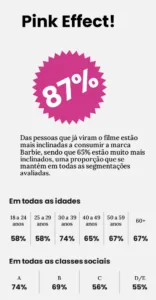 Barbie brand's strength
Much has already been said about Barbie being the biggest pop culture hit of the year and coloring cities pink. But now that the pink tide is passing, we ask ourselves:
- What was the real impact of the movie on building Barbie's brand value?
- Beyond the social commotion, what were the business results?
- Did the brand manage to rejuvenate itself and re-signify its communication for new times?
- What is the real balance of all this investment?
These questions apply to Barbie, but they could be questions any manager has about their own branding challenges. As we always say, the brand IS, the business DOES, and communication SPEAKS. Alignment between these three fronts is essential not only to generate value but also to manage it.
High satisfaction across all segments (social classes, gender, and age) shows the brand's power to expand its audience. A positive impact on Barbie's branding and purchase intent for new products has already been detected.
The brand had a strong identification with a portion of the population, especially women in classes A and B, but was not connected to other social classes and men. The film had the challenge of re-signifying Barbie's value proposition.
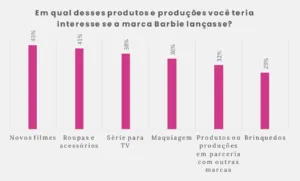
The film was a successful product with a great impact on Barbie's BVS, but the low BVS among audiences who did not watch it shows a new challenge. How to reach this audience? New releases and the expansion of Barbie as a creative platform (series, games, fashion/beauty) show a natural path. Thinking about Mattel, the contribution Barbie brought to the brand and the business is already very valuable, and there is great synergy for the company to launch productions of other franchises.
| Read the COMPLETE study on this brand research for FREE – click and download the file |
How to conduct brand research?
Conducting effective brand research involves a series of carefully planned steps. Here is a step-by-step guide to conducting brand research:
→ Step 1: Define your brand research objectives
Before starting the research, it is essential to be clear about the objectives you want to achieve. Ask yourself why you are conducting the research and what you expect to learn or achieve from the results.
→ Step 2: Determine your target audience
Identify the target audience you want to target with the research. This will help shape the questions and data collection strategy.
→ Step 3: Choose the research methodology
There are several methodologies you can use to conduct brand research, including:
- Market research: Using online questionnaires, telephone or in-person interviews to collect responses from a large number of people.
- Focus groups: Conducting group discussions with a small number of participants to gain qualitative insights.
- Individual interviews: Conducting in-depth interviews with individuals to obtain detailed information.
- Social media analysis: Monitoring conversations and sentiments related to the brand on social networks and online forums.
Choose the methodology that best suits your objectives and resources.
→ Step 4: Develop a questionnaire or interview script
If you are using market research, focus groups, or interviews, you need to develop a questionnaire or interview script with specific questions related to your brand and research objectives. Make sure the questions are clear and objective.
→ Step 5: Collect data
Conduct the research according to the chosen methodology. If you are using market research, distribute questionnaires online or offline to the target audience. If you are conducting focus groups or interviews, schedule and conduct the sessions.
→ Step 6: Analyze the results
After collecting the data, analyze it carefully. Use data analysis tools if you are dealing with quantitative research. For qualitative research, analyze the responses for trends, themes, and insights.
→ Step 7: Interpreting the results
Translate raw data into insights and conclusions. Evaluate how the brand is perceived by the target audience, identify strengths and weaknesses, and understand areas that need improvement.
→ Step 8: Take action based on the results
Based on the research findings, create an action plan to strengthen your brand. This may involve product improvements, adjustments to the marketing strategy, more effective communication, or other initiatives.
→ Step 9: Monitor and repeat
Brand research is an ongoing process. After implementing the recommended changes, continue to monitor brand perception over time. If necessary, repeat the research periodically to assess progress and make additional adjustments.
Remember that brand research is a valuable tool for understanding how your brand is perceived by customers and for making informed decisions to improve and strengthen your market presence.
Respondent panel. Advantages of using it in your projects
Need research with respondent samples? Count on Painel TAP.
Behind Painel TAP is a team passionate about data and insight generation, who finds in each project a challenge to seek the best and fastest solution for the most diverse types of needs and demands in online research and market investigation.