Random and Representative Sampling: When and How to Use Each Approach
5 min read
What is random sampling?
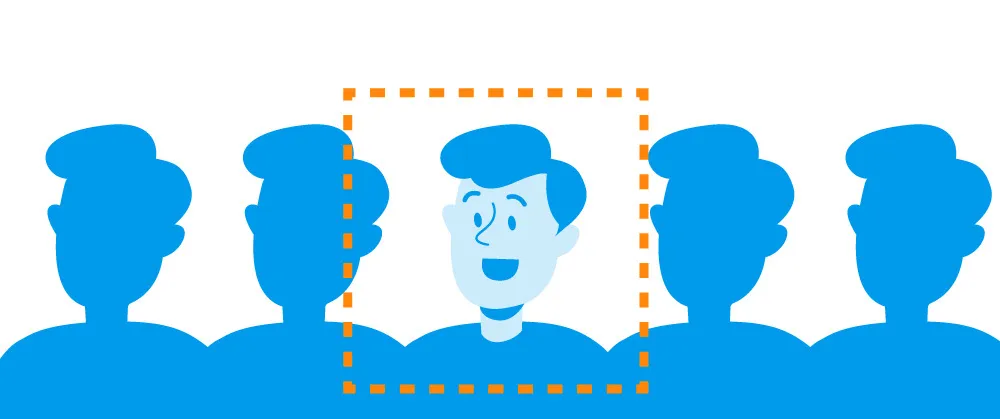
Random sampling is a probabilistic method in which all individuals in a population have an equal chance of being selected. In other words, the selection of participants occurs randomly, without researcher interference.
This type of sampling aims to reduce selection bias and, for this reason, is widely used in traditional statistical research. Furthermore, when well applied, it allows for more secure generalizations to the studied universe.
However, although the draw is technically correct, it does not, by itself, guarantee that the sample faithfully reflects the population's composition in aspects such as gender, age, income, or location. In other words, a random sample can be statistically valid but still not very representative.
Read also: Sampling Solutions in Online Panels
What is representative sampling?
On the other hand, representative sampling focuses on reproducing the real profile of the population within the sample. For this, the researcher predefines criteria and proportions that need to be respected, such as age group, region, social class, or consumption behavior.
In this model, the selection of participants is guided by the need to mirror the researched universe. Thus, the main objective is not pure random selection, but rather fidelity to the population profile.
Consequently, representative sampling increases the relevance of the results, especially when the research seeks to understand perceptions, habits, or opinions of specific groups.
Read also: Unraveling Sampling: The Key to Understanding Large Datasets
Main differences between representative and random sampling
Although both have methodological value, the differences between them directly impact the type of insight generated.
-
Participant selection criteria
Random sampling prioritizes equal chance in selection, meaning any individual in the universe has the same probability of participating in the research. Representative sampling, on the other hand, prioritizes profile balance, ensuring that specific groups are present proportionally to the real population. -
Sample profile control
While random sampling offers little to no control over respondents' demographic and behavioral characteristics, representative sampling requires prior definition of criteria such as age, gender, region, income, or consumption habits. As a result, the researcher achieves greater precision in understanding the audience. -
Dependence on the research universe
Random sampling heavily depends on a well-defined, accessible, and updated universe. Without this, the method loses strength. Representative sampling, on the other hand, adapts better to digital contexts, online panels, and dynamic databases, where profile control is more feasible than pure random selection. -
Operational complexity
From an operational point of view, random sampling is usually simpler in the initial design but may require later adjustments. Representative sampling, on the other hand, requires greater planning, constant monitoring of data collection, and often real-time corrections to maintain profile balance. -
Adherence to market reality
Although it demands more effort, representative sampling tends to produce results closer to reality, especially in social and market research. This is because it considers the structural differences between groups and avoids distortions caused by over or under-representation.
Read also: Sampling Calculator for surveys
When to use each type of sampling?
The importance of methodological balance
In practice, many studies combine elements of both models. It is possible, for example, to apply representativeness criteria and, within these groups, select participants randomly. In this way, the researcher reduces bias and, at the same time, ensures that the sample reflects the studied universe.
Therefore, more than choosing between one approach or another, the essential thing is to align the sampling technique with the research problem, the target audience, and the type of decision that will be made based on the data.
Read also: What are non-probabilistic sample types?